Synchronizing Live Session Timings With Reward Milestones Across Blackjack Game Formats
Taylor Wolf · Aug 25, 2026
Synchronizing Live Session Timings With Reward Milestones Across Blackjack Game Formats
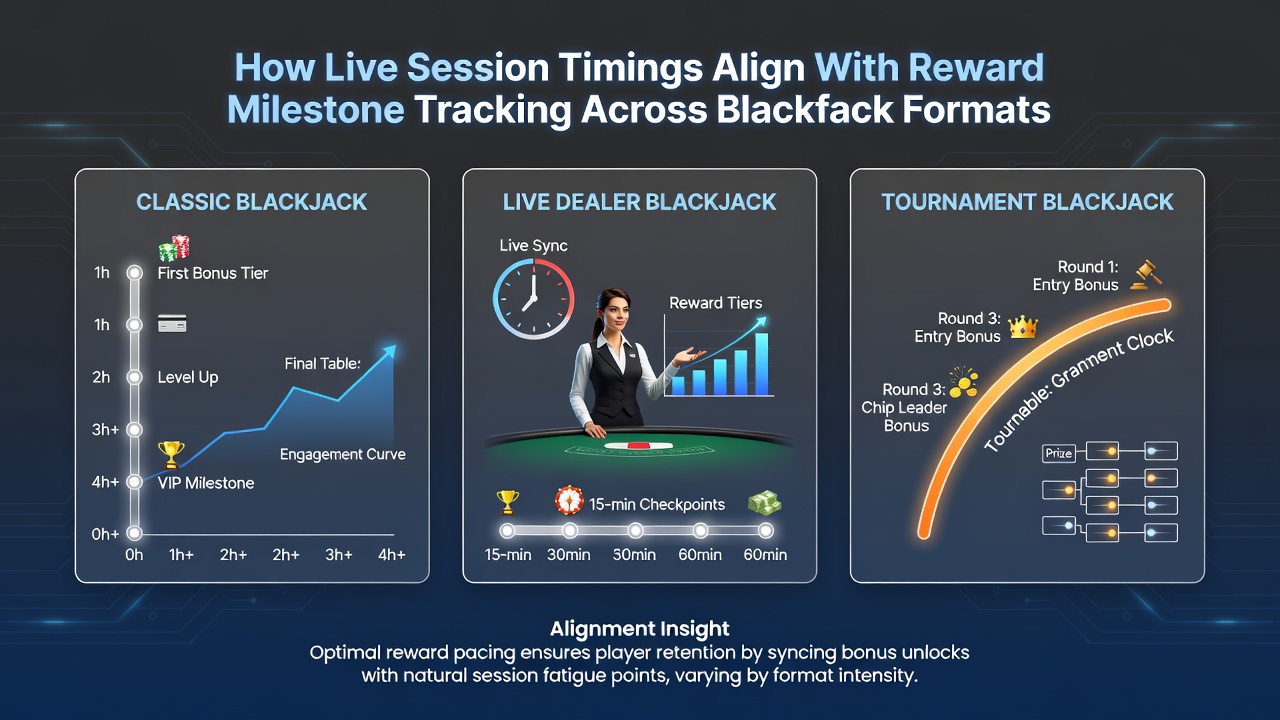
Live blackjack formats incorporate session timing structures that coordinate directly with reward milestone systems, and operators design these alignments to manage player progression across standard tables, variant rulesets, and networked environments. Session lengths typically range from thirty minutes to two hours depending on the format, while reward milestones activate at specific hand counts or elapsed times that match those intervals. Data collected from platform logs shows that shorter sessions in speed variants often trigger early-stage bonuses after twenty-five hands, whereas extended classic formats release milestone credits after fifty hands completed within a ninety-minute window.
Session Duration Structures in Different Formats
Standard live blackjack sessions run on fixed schedules that align reward releases with cumulative play metrics, and observers note that dealers announce time remaining at fifteen-minute marks to keep participants informed about approaching milestones. Speed blackjack reduces average hand duration to forty-five seconds, which allows reward tracking software to register progress every ten hands rather than every fifteen, creating tighter synchronization between time spent and bonus activation. Infinite blackjack variants extend session flexibility through continuous dealing cycles, yet milestone systems still tie rewards to elapsed real-time segments of forty minutes or eighty minutes to prevent indefinite play without structured breaks.
Platform records indicate that players completing sessions within designated windows receive milestone confirmations immediately upon reaching thresholds, while those exceeding time limits see delayed or adjusted reward calculations. Regulatory reports from the Nevada Gaming Control Board document how these timing protocols maintain consistency across licensed operators, and figures from August 2026 updates reveal increased adoption of automated timers that pause reward counters during dealer changes or technical interruptions.
Reward Milestone Mechanisms and Timing Integration
Reward systems track milestones through hand totals, win streaks, and session completion percentages that correspond to preset time blocks, and software platforms update these counters in real time to reflect alignment accuracy. One documented case involves a multi-format tournament where participants advanced reward tiers only after finishing live sessions that matched exact duration requirements of sixty minutes for preliminary rounds and one hundred twenty minutes for finals. Tracking tools log entry and exit timestamps for each player, then cross-reference those records against milestone criteria to determine eligibility for tiered payouts or leaderboard placements.
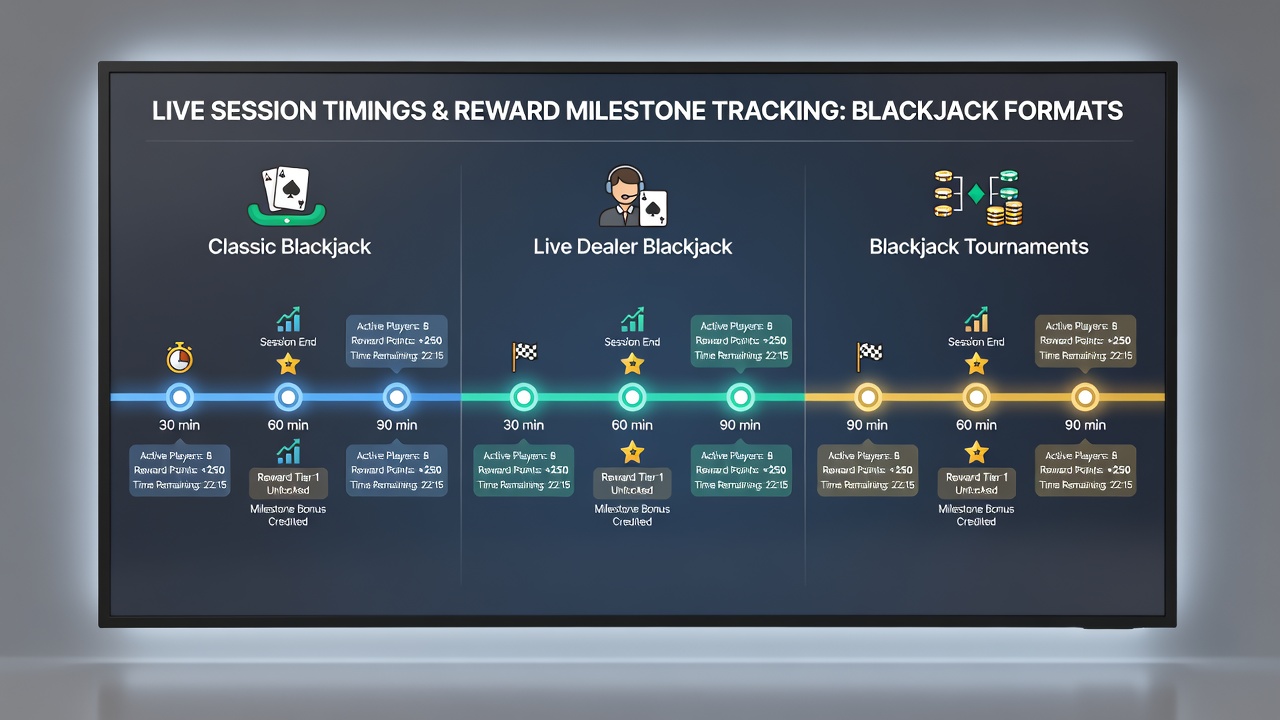
Operators adjust milestone spacing based on format-specific hand rates, since classic tables average fifty hands per hour while variant tables with side bets process closer to seventy hands in the same period. This adjustment ensures that reward releases occur at comparable effort levels regardless of the chosen format. Industry analyses from the American Gaming Association highlight how precise timing alignment reduces discrepancies in reward distribution and supports consistent player engagement metrics across different game offerings.
Cross-Format Comparisons and Data Patterns
Comparative studies across platforms show that reward milestone timing varies systematically by format, with live dealer sessions in European rulesets using longer intervals between milestones to account for slower card delivery speeds. North American formats often compress these intervals because faster dealing cycles allow more hands within identical session lengths. Research compiled by academic gaming studies groups indicates that alignment precision improves when operators implement synchronized clocks visible to both dealers and players, reducing instances of milestone disputes by measurable percentages.
August 2026 platform updates introduced enhanced logging features that capture sub-minute timing data for each hand, enabling finer adjustments to reward triggers. These changes allow milestone systems to account for brief pauses without disrupting overall session alignment, and operators report that such refinements maintain fairness across all participating formats.
Conclusion
Live session timings and reward milestone tracking operate through coordinated structures that adapt to the operational characteristics of each blackjack format. Platform data, regulatory documentation, and comparative analyses confirm that these alignments depend on hand-rate calculations, fixed time windows, and automated logging systems that update continuously. Continued refinement of timing protocols supports consistent milestone delivery while accommodating variations in dealing speed and session length across standard, speed, and infinite formats.